 Student Success & Guidance
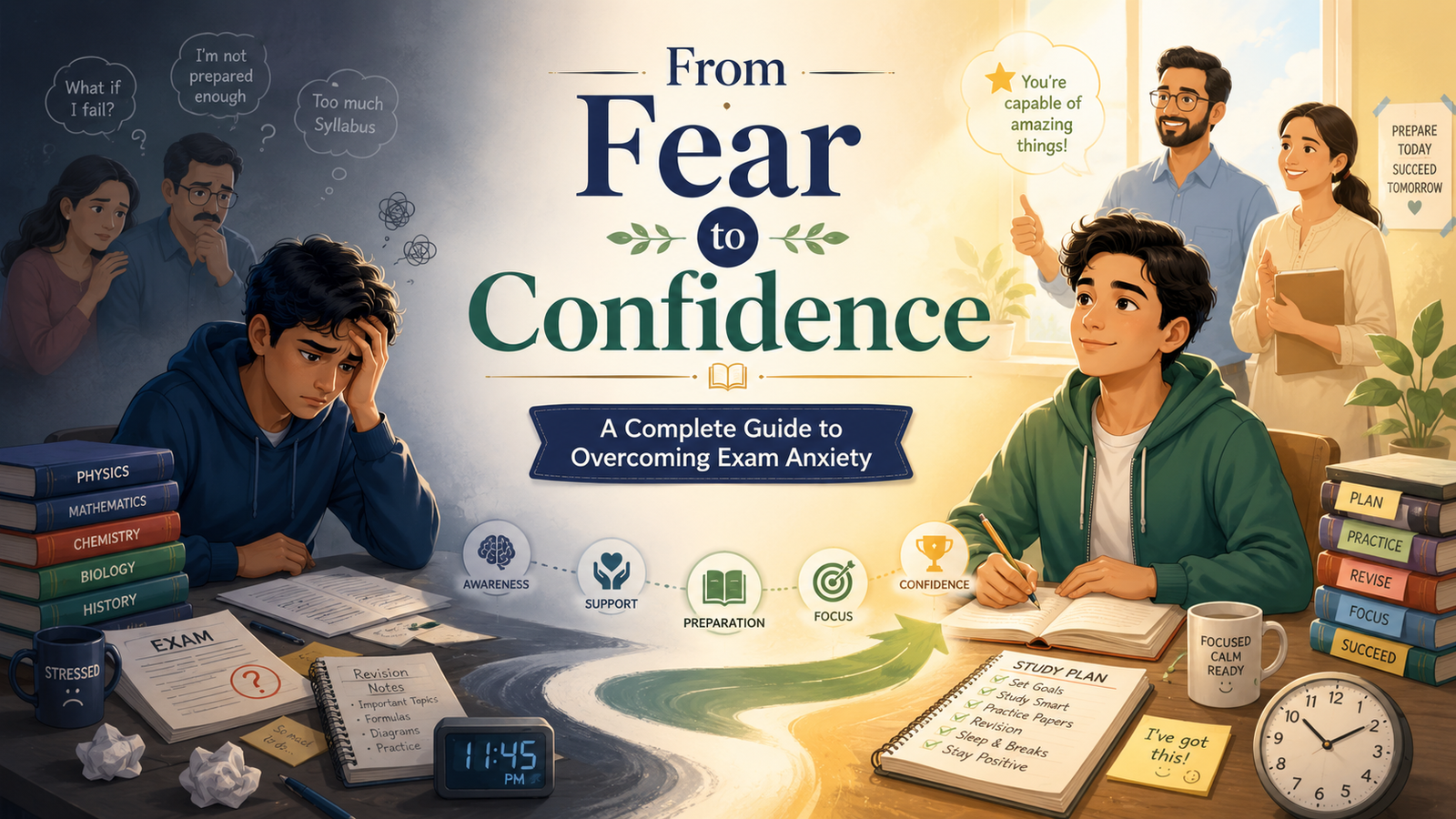
From Fear to Confidence: A Complete Guide to Overcoming Exam Anxiety
“Success is not final, failure is not fatal: It is the courage to continue that counts.”
— Winston Churchill
One of the greatest challenges students face is fear. Whether it is the fear of failure, making mistakes, or not meeting expectations, fear often becomes a major barrier to academic performance. Among these, exam fear is one of the most common and can significantly affect a student’s confidence, concentration, and overall well-being.
As parents and teachers, it is our responsibility to help children overcome this fear rather than allowing it to limit their potential. By creating a supportive environment, encouraging positive thinking, and building self-confidence, we can help students approach examinations with a calm and confident mindset.
This article aims to provide practical insights for parents, teachers, and students on understanding exam fear and exploring effective strategies to overcome it, ultimately helping every child perform to the best of their ability.
Why Do Students Fear Exams?
To tackle the problem of fear, we must first understand what contributes to it. There are several factors that build fear in a student’s mind:
- • Fear of failure.
- • High expectations from parents, teachers, or society.
- • Lack of proper preparation.
- • Poor time management and mindset.
- • Comparing themselves with others.
- • Previous negative experiences in examinations.
- • Low self-confidence.
- • Pressure to secure high marks.
How Parents Can Help
Avoid Comparing Your Child with Others
No kid is unsmart. Every kid is a genius at something—our job is to find it and then encourage it.
Praise Effort, Not Just Results
Celebrate the hard work, consistency, and determination your child shows while preparing for exams. Appreciating effort encourages a growth mindset and helps children stay motivated even when they face challenges.
Provide a Positive Learning Environment
A peaceful and supportive home environment plays a vital role in a child’s academic success. Parents should try to avoid exposing children to frequent quarrels, conflicts, or unnecessary stress, especially during examination periods. Such situations can affect a child’s emotional well-being, reduce concentration, and weaken their confidence.
Instead, create an atmosphere where children feel safe, valued, and encouraged. Simple words of reassurance, patience, and emotional support can help them stay focused and approach their studies with confidence. A calm home environment enables children to learn effectively and face examinations with a positive mindset.
Maintain Realistic Expectations
Set goals alongside your child that challenge them without overwhelming them with unachievable targets.
How Teachers Can Help
“Your best teacher is your last mistake.”
— Dr. A. P. J. Abdul Kalam
These inspiring words remind us that mistakes are valuable learning opportunities. Teachers play a vital role in helping students understand that making mistakes is a natural part of the learning process.
A teacher is not only an instructor but also a guide, mentor, and one of the strongest pillars in a child's educational journey. Beyond teaching lessons, teachers help build confidence, develop character, and inspire students to believe in their abilities. To help students overcome exam fear, teachers should:
- • Build conceptual understanding: Ensure that students clearly understand concepts, not just for scoring good marks but also for applying their knowledge in real-life situations.
- • Appreciate every effort: Recognize and encourage students' hard work and progress, even when the results are not perfect. Positive reinforcement boosts confidence.
- • Conduct regular mock tests: Familiarize students with the examination pattern through practice tests. This reduces anxiety, improves time management, and increases confidence.
- • Create a supportive classroom environment: Encourage students to ask questions freely without the fear of being judged or criticized.
- • Provide constructive feedback: Help students identify their strengths and areas for improvement in a positive and encouraging manner.
When teachers combine knowledge with encouragement and empathy, they empower students to face examinations with confidence rather than fear.
How Students Can Overcome Exam Fear
1. Understand the Purpose of Examinations
The first step in overcoming exam fear is to understand that examinations do not measure your worth as a person. They are simply a tool to assess your understanding of concepts and identify areas that need improvement. Instead of seeing exams as a judgment, view them as an opportunity to learn, grow, and improve.
2. Take Care of Your Health
Good health is the foundation of effective learning. A healthy body supports a healthy mind. Students should maintain a balanced diet, eat meals on time, stay hydrated, exercise regularly, and get adequate sleep. Lack of sleep and poor eating habits can reduce concentration, memory, and overall academic performance.
3. Be Consistent in Your Studies
Consistency is one of the most important qualities of a successful student. It is not necessary to study for long hours every day. Even one hour of focused and distraction-free study is valuable if done consistently. Regular study habits help reduce stress and prevent last-minute preparation.
4. Revise Regularly
Learning does not end after studying a topic once. Revision is essential for long-term retention. Psychologists have found that information becomes more firmly stored in long-term memory through repeated review. Revisiting concepts multiple times strengthens understanding and improves recall during examinations.
5. Use the Pomodoro Technique
Studying continuously for long hours can lead to fatigue and reduced concentration. The Pomodoro Technique is an effective time-management method: study for 25 minutes, take a 5-minute break, and after four sessions, take a longer break of 15–30 minutes. This maintains focus and prevents burnout.
6. Prepare Well in Advance
One of the most effective ways to reduce exam fear is to be well prepared. When students understand the concepts, revise regularly, and practise questions, they naturally become more confident. Good preparation replaces fear with confidence and allows students to face examinations with a calm and positive mindset.
Final Thought
Confidence is not built overnight. It is the result of consistent effort, healthy habits, regular revision, and a positive attitude. Remember, the goal of education is not just to score high marks but to gain knowledge, develop skills, and become a lifelong learner.
Written by Teacher – Aswani P
Dedicated to guiding students toward academic success through emotional support, effective study techniques, and positive mindset development.